Marketing Ops
5 marketing predictions for 2027 (and what I'm doing about each) 🔮
Five marketing predictions for 2027 for small B2B teams: DIY with AI, real ads beating AI ads, shifting AI recommendations, AI plug-ins and agent buyers. One move for each.
Quick answer: My five marketing predictions for 2027: customers will try to build your product with AI before they buy it, real and slightly weird ads will beat polished AI-made ones, AI assistants will change who they recommend with every new model, your best customers will plug your tool into their AI, and AI agents will start buying and cancelling on your customers’ behalf. Each one has a small move a lean team can make now.
Quick test before we start 🤔
A small business owner finds your product. It costs $300 a month. They have a Claude subscription and a free Saturday.
What do they do next?
Book a demo❌Ask ChatGPT which tool is best❌ (warmer)Try to build it themselves✅
That’s prediction number one. And it’s already happening.
I build marketing systems for small B2B teams. These are the 5 shifts I’m betting on for 2027, and what I’m already doing about each one on my own site. Because I’m not asking you to try anything I won’t.
 Five shifts, one move each.
The idea 💡
Your buyer now has a sidekick. An AI that can build, judge, buy and cancel.
You’re marketing to both of them.
Why I’m so sure 🧠
This isn’t a crystal ball. The receipts are already in:
- A May 2026 Zapier survey found 34% of people building work tools with AI have no formal programming training.
- NielsenIQ’s brain research found viewers spotted most AI-generated ads, rated them less engaging, and even the “high quality” ones left weaker memory activation than traditional ads.
- SparkToro found AI tools give a different list of brand recommendations more than 99% of the time for the same prompt.
The 5 predictions ✍️
1. Customers will build it first 🧱
Your customer doesn’t need a developer to make a rough copy of you anymore.
So they try. Saturday morning, big coffee, bigger plans. By Saturday night it sort of works. By Sunday they hit the boring stuff: logins, edge cases, the bit that breaks at 2am.
Here’s what most companies do: ❌ pretend DIY isn’t an option and hope nobody tries.
Here’s what I’d do: ✅ meet them while they’re still building.
That’s exactly why I give away free tools. My DMARC record generator and my free Marketo Inspector Chrome extension each do one small job really well. People who would never book a call use them. Then, when they get stuck on the big job, they already know my name.
Steal this page outline:
Build it yourself vs [your product]

What you'd need to build: [the 3-5 parts]
Time to first version: [honest estimate]
What it costs to run each month: [hosting, API calls, your time]
Where DIY usually breaks: [the edge cases you handle]
When DIY is the right call: [be honest]
What we do that's hard to copy: [one thing]
Yes, include “when DIY is the right call”. The honesty is the whole trick.
2. Weird, real ads will win 🎭
Scroll Instagram for 30 seconds. Count the ads that look like the same robot made them.
Same glossy light. Same poreless skin. Same smiling family who has never once been late for school pickup.
Your thumb doesn’t even slow down.
Now listen: AI isn’t the problem. Generic is.
I learned this one the hard way this month. I launched a $19 kit on AI photos, and the first before-and-after on the sales page was a “perfect” AI perfume bottle. One look and my verdict was: this image doesn’t sell. I swapped it for a portrait that looks like a real person at golden hour. Same AI. Completely different feeling.
My rule for 2027: make at least half your ads from real moments, filmed on a phone. Let AI do the boring jobs, like resizing, captions and backgrounds. If you do use AI images, make them look shot, not generated.
3. AI will keep changing its favourites 🔀
You can be ChatGPT’s favourite in March and gone by June.
No email. No warning. No “it’s not you, it’s me.” A new model drops and you’re just… not on the list.
That’s less loyal than a cat at feeding time.
And people don’t search in keywords anymore. One search my site showed up for this month, word for word:
does getting listed on cited third-party sites guarantee a mention in chatgpt answers?
That’s not a keyword. That’s a whole conversation.
The good news? Every model still reads the web to answer. So the pages it reads are your lever.
My move: check where you stand in ChatGPT, Claude and Gemini every month. Answer the question in the first sentence of the page. Write a page for the exact question your buyer asks. Add a number only you have. My guides on getting cited by ChatGPT and measuring your share of AI answers walk through both.
4. Customers will plug you into their AI 🔌
Here’s a weird one: your customers are going to stop logging in to your dashboard.
They’ll still pay you. They’ll just ask their AI instead.
"Hey Claude, how many leads came in last week?"
Done. No login. No 14 open tabs. No reset-your-password email.
I did this myself today. I plugged my own automation server into Claude. It took about 20 minutes (and one argument with Cloudflare). Now my automations are one question away, inside the tool I already have open all day.
And HubSpot saw it coming. It made its remote MCP server generally available in April 2026, so Claude or ChatGPT can read and update CRM data in plain English.
Once a tool lives inside someone’s AI, ripping it out feels like moving house. Nobody moves house for fun.
My move: if you sell software, ship a connector (an MCP server) and make “Connect us to your AI” step one of onboarding. If you sell services, make your knowledge easy for AI to read: clear pages, plain answers and an llms.txt file.
5. AI agents will buy and cancel for people 🛒
OpenAI already lets people buy straight inside ChatGPT with Instant Checkout.
Now flip it around. The same kind of agent that buys for people will soon cancel for them too.
Picture your customer’s AI doing its monthly sweep:
"You pay for 11 tools. You opened 4 of them. Want me to cancel the rest?"
Gulp. 😬
Agents read your price, your reviews and your specs. They don’t see your clever hero image. They don’t laugh at your tagline. They’re accountants with no sense of humour.
So on my own store, the facts are written for robots too. My $19 kit’s page carries the price, the refund window and what’s inside in schema markup, so an agent can read the whole offer in one go.
My move: make the facts dead easy to read (price, plans, reviews and specs on the page and in schema markup). Then send a short monthly “here’s what we did for you” email. When an agent asks your customer “keep or cancel?”, the answer should be so obvious it doesn’t even ask.
Automate it ⚙️
Prediction 3 is the one almost everyone ignores.
Everyone means to check. Nobody does, because asking three AI tools the same five questions every month is about as fun as doing your tax return.
So build a small AI agent that runs the “AI shelf check” for you:
- Schedule: it wakes up on the first Monday of the month.
- Questions: a Google Sheet holds the five questions your buyers actually ask (“best marketing automation consultant in Melbourne”, for example).
- Ask: the agent sends each question to ChatGPT, Claude and Gemini through their APIs.
- Score: it checks each answer for your brand and your top three competitors.
- Log and alert: results go back into the sheet, and Slack pings you if you drop out of an answer you were in last month.
You don’t need a big automation platform for this. A small script on a schedule does the job, and an AI coding tool can write most of it for you in an afternoon. Here’s the scoring prompt:
You are checking an AI answer for brand mentions.
Answer: {{answer}}
Brands to check: {{my_brand}}, {{competitor_1}}, {{competitor_2}}, {{competitor_3}}
Return JSON: {"mentioned": [brands named], "position": {"brand": 1-10 or null}, "sources_cited": [urls]}
Only report brands that appear in the answer. Never guess.
Rather have it built and running without touching code? That’s exactly what I do in my AI agents work.
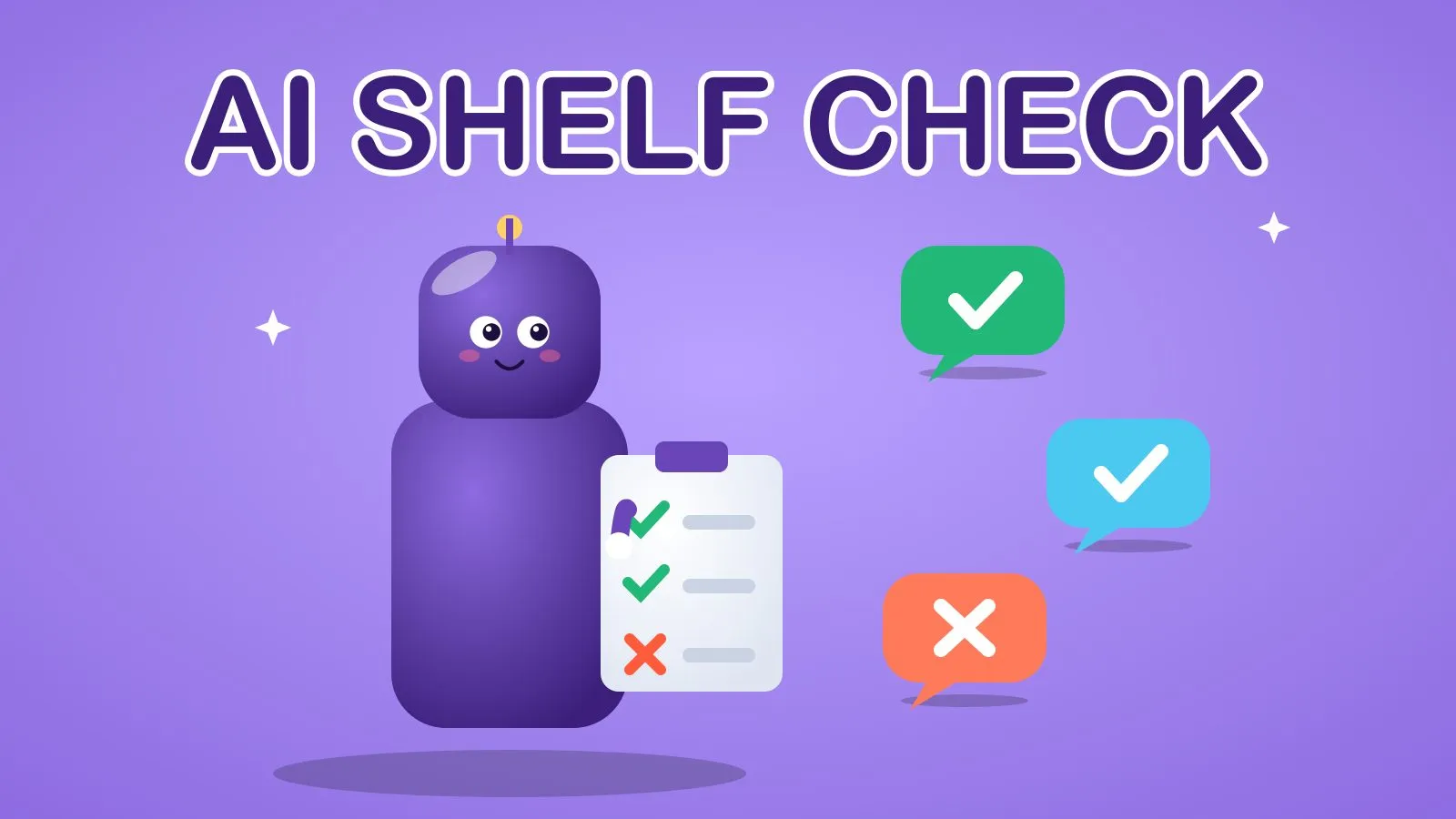 The monthly AI shelf check, on autopilot.
Quick wins to try 🧪
- 🧱 Ask ChatGPT to build your product tonight. Write down where it gets stuck. That’s your “vs DIY” page.
- 📱 Film one real, slightly weird moment this week. Run it against your best AI-made ad and see who wins.
- 🔎 Ask ChatGPT, Claude and Gemini your buyer’s top question. Screenshot the answers. Brace yourself.
- 🧾 Draft a monthly “what we did for you” email with three numbers from your own system.
How to measure it 📊
- AI mention rate: the share of your five buyer questions where you’re named, per model, each month.
- Ad hook rate: how many people watch the first three seconds of real-moment ads versus AI-made ads.
- Cancellation reasons: track “found a cheaper or DIY option” as its own reason, so you see prediction 1 coming before it hits.
Frequently Asked Questions
What are the biggest marketing trends for 2027?
Buyers building their own tools with AI, a swing back to real and human ads, AI assistants changing their recommendations, customers connecting tools to their AI, and AI agents buying and cancelling for people. All five come from the same thing: your buyer now works with an AI next to them.
Are AI-generated ads effective?
They can reinforce what people already know about a brand, but NielsenIQ found viewers spot most of them and rate them less engaging, and they leave weaker memories than traditional ads. Use AI for production work and build the ad around a real moment or idea.
How do I stay recommended by ChatGPT in 2027?
Check your visibility every month across several AI tools, because the list changes often. Then keep the pages AI reads in good shape: answer the question in the first sentence, write pages for the exact questions buyers ask, and add facts only you have.
Will customers build it instead of buying it?
Some will try, and a few will get far enough to stop buying. Most hit the hard part (upkeep, security, edge cases). Meet them early with an honest DIY comparison and a free small version, so you’re the obvious next step when they get stuck.
Your homework 📝
Pick one prediction. Just one. Do the move this week.
Worst case, you learn something your competitors won’t figure out until 2028.
Those are my five bets. Which one would you bet against?
Sam
P.S. If number one made you a little nervous, good. Go ask ChatGPT to build your product tonight and watch where it gets stuck. That’s your next landing page, written for you.
If you want this built for you, book a call.